
1. Why Embroidery Quotes Look Different from Print Quotes
Ordering a logo on 24 polos should come with a simple per-shirt price. Instead, the quote lists stitch counts, digitizing fees, and per-placement charges. It reads more like a contractor’s invoice than a price tag.
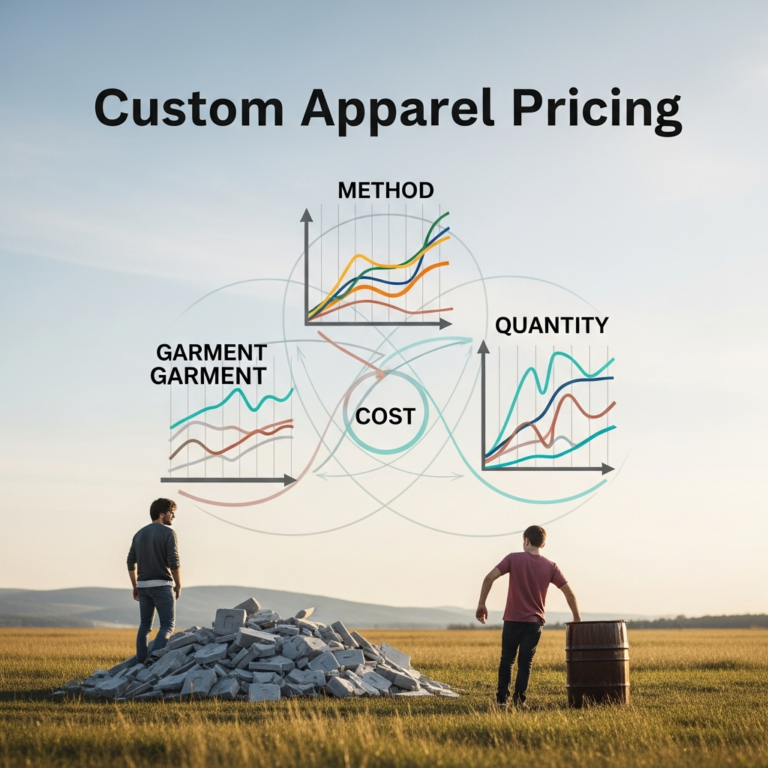
That’s because embroidery is service work. The final cost depends on four things: design complexity (stitch count), whether a new stitch file needs to be created (digitizing), how many spots on the garment get decorated (placement), and how many pieces are in the order (quantity).
Once those four pieces make sense, quotes stop being confusing. Comparing shops becomes about what actually matters instead of chasing the lowest number.
Fresh Prints Supply uses stitch-based pricing with line-item quotes. Every component is visible, from the digitizing setup to the per-piece stitch charge.
2. The Two Buckets: One-Time Costs vs. Per-Item Costs
Every embroidery quote breaks into two categories.
One-time costs cover digitizing or logo setup for each design size and placement. These are paid once. Reorders skip them. On larger orders, Fresh Prints Supply waives the digitizing fee entirely.
Per-item costs cover the actual stitching at each location on each garment. These scale with order size, with price breaks at 12, 24, and higher quantity tiers.
Most professional shops price embroidery by stitch count rather than a flat “per logo” rate. A small, open wordmark and a large, dense crest are both “one logo,” but one takes three times the machine time, thread, and operator attention.
If a shop quotes a suspiciously low flat rate per logo with no mention of stitch count, something is being cut. Usually it’s digitizing quality, thread quality, or garment choice. Or there are fees that surface later.
3. Stitch Count: The Biggest Variable in the Quote
Stitch count is the number of individual stitches the machine sews to create the design. Higher count means longer run time, more thread, and more opportunity for quality issues. That’s why two logos the same physical size can have very different prices.
A simple one-color left-chest wordmark might run 3,000 to 5,000 stitches. A detailed shield or crest with filled areas can hit 12,000 to 15,000 or more. Size matters more than colors. At Fresh Prints Supply, pricing is based on stitch count, not color count, so multi-colored logos don’t automatically cost more.
Shops build pricing in bands. Designs up to a certain stitch count fall into one tier, and each additional band increases cost. A clean, open logo with thin lines sits in a lower band. A filled logo with lots of small shapes, outlines, and color blocks pushes into higher tiers.
The biggest lever for keeping costs down is design simplification. Cutting dense fills, removing tiny text (anything below 0.25 inches tall becomes a thread blob and isn’t legible), and simplifying gradients can drop stitch count significantly.
4. Digitizing: The One-Time Fee That Affects Everything
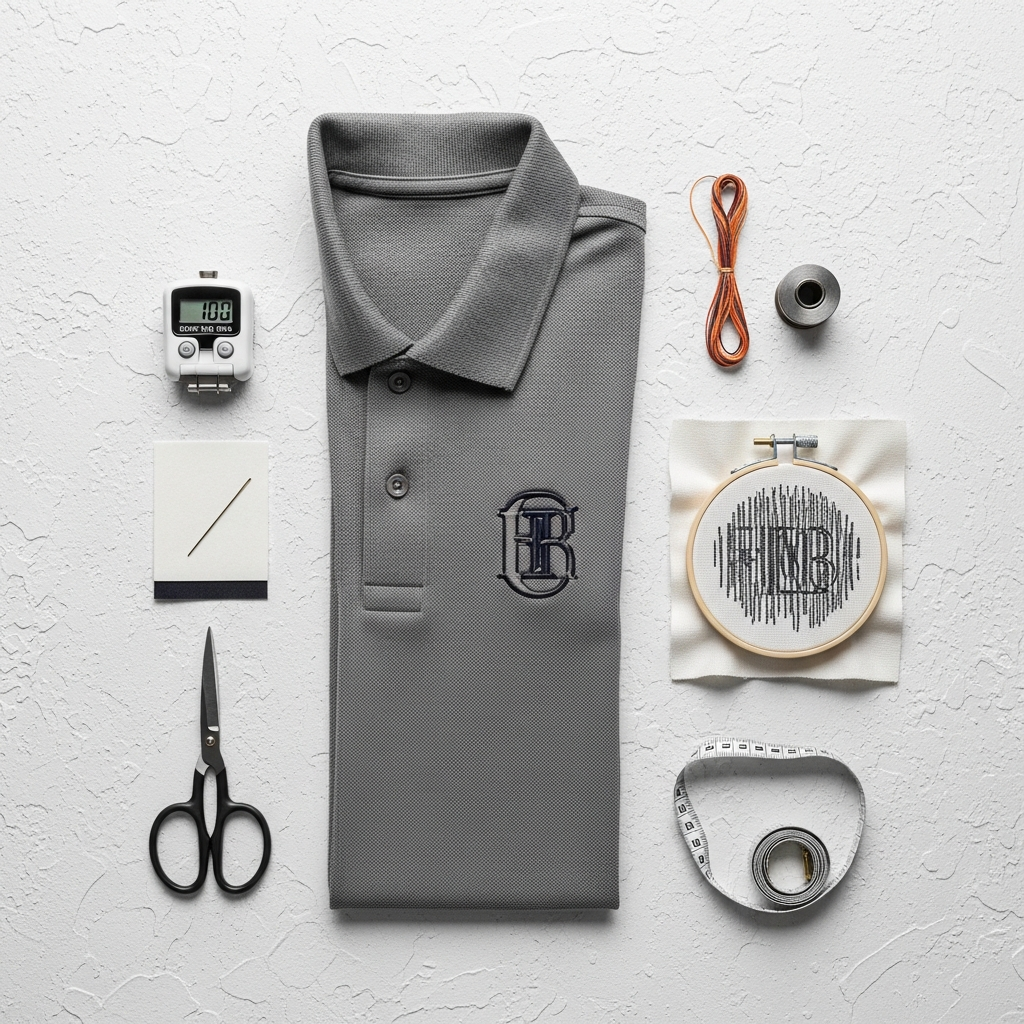
Before a machine can sew a logo, a digitizer builds the stitch file. That means plotting stitch paths, setting densities, planning underlay (the stabilizing stitches underneath the visible design), and sequencing color changes and trims. Fresh Prints Supply handles all digitizing in-house.
The charge applies once per design, per size, per placement. A left-chest logo and a large back version of the same logo need two separate digitized files. But once approved, reorders reuse the same file at no extra charge. The same digitized file can also be applied across multiple garment types, though stitch density may need adjustment between a polo chest and a jacket back.
Complexity drives the cost. A single-color icon is quick. A multi-color crest with small text and gradient fills takes significantly more time. Photographic or gradient-heavy artwork is generally not suitable for embroidery and should be simplified before digitizing.
Digitizing quality shouldn’t be treated as a throwaway line item. The stitch file directly controls how cleanly the logo sews, how it sits on the fabric, and how fast the machine can run it. Bad digitizing means thread breaks, registration issues, and a logo that looks rough up close.
5. Placement: Every Location Is a Separate Charge
Embroidery is priced by location. Left chest, cap front, sleeve, full back: each one is a separate line item because the operator re-hoops the garment, swaps fixtures, and runs a new stitch sequence.
Hat fronts typically cost more than flat chest logos. Caps need specialized hoops, the surface is curved and structured, and machines run slower to maintain quality on that geometry. Structured caps with a firm front panel produce the cleanest results. Unstructured or very soft caps can sometimes shift during stitching, adding complexity.
For budget-conscious orders, sticking to one high-impact placement (usually left chest for polos or front panel for hats) makes the biggest difference. Adding sleeve flags and back text looks great but adds real cost per piece.
6. Fabric Matters More Than Expected
Not all garments embroider the same way. The garment cost is usually listed separately, but fabric type can change the per-piece embroidery cost too.
Problem fabrics include stretchy performance knits (need heavy stabilizer backing), thick fleece (stitches sink without a water-soluble topping), and structured caps (slower speeds, specialized hoops).
Embroidery works best on stable, structured fabrics: polos, caps, jackets, tote bags, and fleece. These materials hold their shape under stitching tension and produce clean, well-defined designs. Sharing garment choices with the decorator upfront saves time and money, because the right backing, tension, and technique can be planned instead of improvised on press.
7. Quantity: Where the Math Shifts
Digitizing, setup, and machine changeover are fixed costs. Stitching each garment is variable. Spread those fixed costs over more units and the per-piece price drops.
Fresh Prints Supply has a standard minimum of 6 pieces per design for embroidery. That threshold covers the digitizing setup and machine configuration required to start production. For quantities below 6, a setup fee may apply to keep the unit cost reasonable. Price breaks kick in at 12 and 24 pieces, with further reductions on larger runs.
A 6-piece order carries a higher per-unit cost because that digitizing fee is divided by 6 instead of 48. At 48 pieces, the setup cost per garment drops to a fraction.
Three ways to take advantage of volume pricing:
- Consolidate orders across teams or departments into one production run
- Order extras now for future needs (reorders are cheaper, but a single larger run is cheapest)
- Standardize logo sizes so one digitized file covers multiple garment types
8. Add-Ons That Affect the Final Price
Standard embroidery pricing covers high-sheen polyester thread, up to eight standard colors, and normal turnaround. Beyond that, common add-ons include metallic or specialty threads (cost more and run slower), 3D puff embroidery on hats (a foam layer under the stitches that makes the design pop out physically), individual name personalization (each garment needs a unique stitch sequence), and rush fees for expedited scheduling.
More thread colors are possible beyond eight, but they add complexity and production time. Frequent color switches increase machine time, which shows up in pricing.
For managing budget, deciding which add-ons are brand-essential versus nice-to-have makes the biggest impact. Flat embroidery instead of 3D puff on hats saves cost per piece. Limiting name personalization to managers instead of the full team cuts per-garment cost.
9. How to Compare Quotes Without Getting Burned
When comparing quotes from multiple shops, five things matter:
Are stitch counts listed for each placement? If one shop lists them and another doesn’t, the second shop is hiding something or cutting corners on digitizing.
Are digitizing fees one-time or per-order? One-time is standard. Per-order means overpaying on reorders.
What’s the garment quality? A quote that appears cheaper per piece might be using a garment that pills after five washes.
What’s included versus extra? Rush fees, specialty threads, name personalization, and extra colors can turn a low quote into an expensive one.
Who owns the digitized file? Some shops hand it over. Others treat it as internal production art. This should be clarified before committing.
Red flags: no stitch count references, extremely low flat “per logo” rates, or vague language about “setup” with no detail.
10. FAQs
How much does embroidery cost per item?
It depends on stitch count, placements, garment type, and quantity. A simple left-chest logo on 24+ polos costs less per piece than a detailed crest on 6 hats with 3D puff. The most accurate answer comes from submitting the actual logo and order details for a line-item quote.
Is the digitizing fee charged every time?
No. Digitizing is one-time. As long as the same logo at the same size and placement is reused, reorders skip that fee. On large orders, Fresh Prints Supply waives the digitizing fee entirely.
Is embroidery cheaper than screen printing?
For small runs with simple logos, embroidery can be competitive. For large runs with multi-color designs, screen printing usually wins on per-piece cost. Embroidery is generally more durable on high-use garments because the design is stitched directly into the fabric rather than applied as ink on top. It does not peel, crack, or fade the way printed designs can over time.
Can a digitized file be taken to another shop?
That depends on the shop’s policy. Some decorators hand over the stitch file. Others treat it as internal production art. This should always be clarified upfront before paying the digitizing fee.
What’s the minimum order?
Fresh Prints Supply’s standard minimum for custom embroidery is 6 pieces per design. For quantities below 6, a setup fee may apply. For team, staff, or event orders, minimum quantities are rarely an issue, and larger runs reduce per-piece cost significantly.
What fabrics work best for embroidery?
Polos, caps, jackets, tote bags, and fleece. Stable, structured fabrics hold their shape under stitching tension and produce the cleanest results.
How many colors can an embroidered design use?
Most standard designs use between one and eight thread colors. More colors are possible but add production time. At Fresh Prints Supply, pricing is stitch-based rather than color-based, so adding a second or third color doesn’t automatically increase the price.
For a detailed quote with line-item pricing, submit the logo, garment preferences, and quantity through the Fresh Prints Supply quote form. Every quote includes a full breakdown with stitch counts, setup details, and garment recommendations.