
Custom Apparel Pricing by Quantity: 25, 50, and 100-Unit Cost Breakdowns
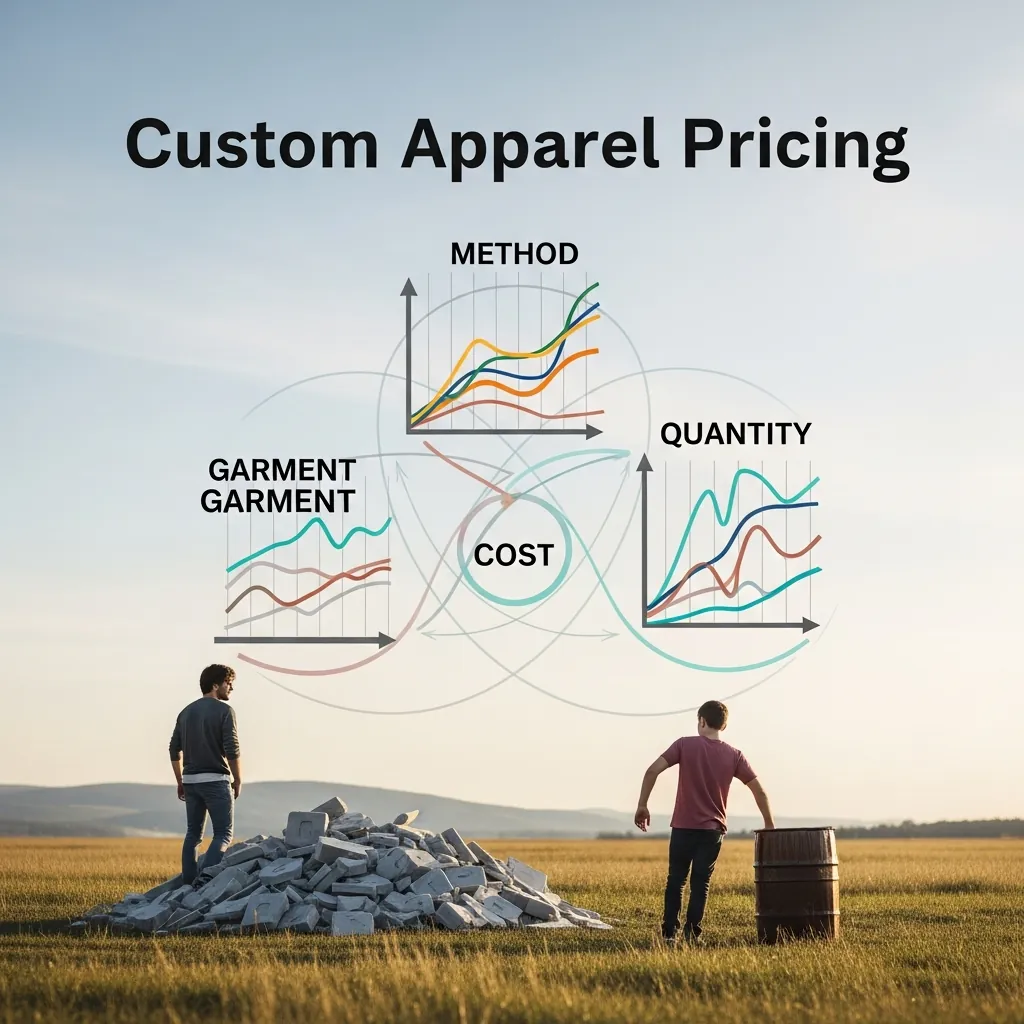
Custom apparel pricing feels confusing until the pieces are visible. Once the method, garment, and quantity are clear, the math starts to make sense and budgeting stops being guesswork.
This guide breaks down real-world scenarios for 25, 50, and 100 units across screen printing, embroidery, DTF, and DTG. Every factor that moves the price is covered, along with where real control over cost exists.
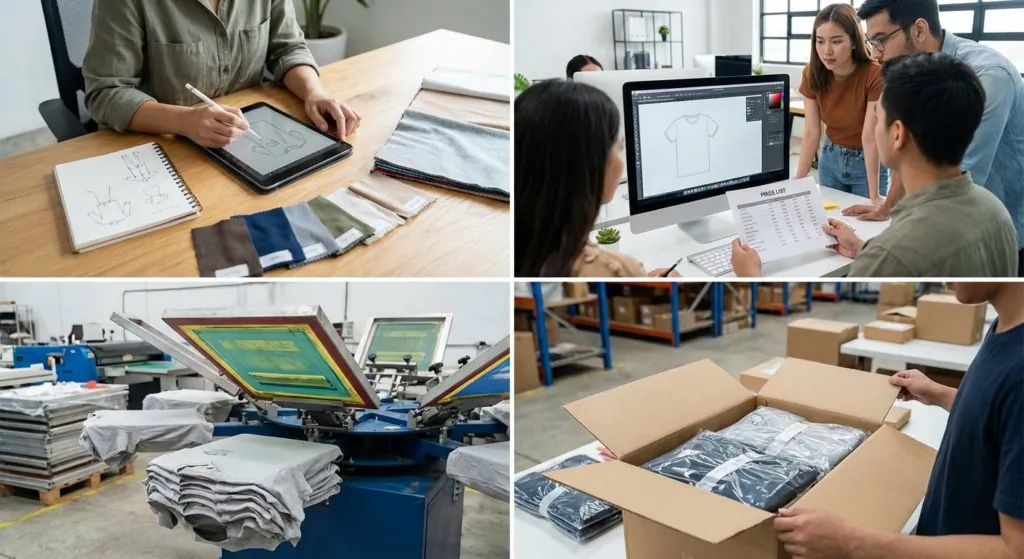
The core formula: garment choice + decoration method + artwork complexity + quantity = final price.
Good to knowKey Factors That Shape Custom Apparel Pricing
Every project is different, but the same core inputs shape almost every order: garment type and brand, decoration method (screen print, embroidery, DTF, DTG), number of print locations, number of colors in the design, order quantity, and turnaround time. Understanding these makes it possible to predict price ranges before ever requesting a quote.
Garment Type: The Base Cost
The garment is the foundation. A standard Gildan cotton tee costs a few dollars per piece. A premium Bella+Canvas or Next Level tri-blend runs higher. A heavyweight hoodie can be several times the cost of a basic tee.
Common categories and their relative cost:
- Basic tees (Gildan 5000, etc.): lowest base cost, popular for giveaways and events
- Premium tees (Bella+Canvas 3001, Next Level 6210): softer blends, retail-style fits, moderate base cost
- Hoodies and sweatshirts: heavier fabrics, significantly higher base cost
- Hats and caps: structured builds, typically embroidered
- Performance or workwear: moisture-wicking or durable fabrics, variable pricing
Even a small upgrade in garment brand can shift the total spend quickly across 50 or 100 units. If budget is tight, adjusting the garment tier before cutting back on the design usually has a bigger impact than removing a print color.
Screen Printing: How It’s Priced
Screen printing is the standard for bulk orders. Low cost per piece at higher quantities, bold colors, and prints that survive 200+ washes when properly cured at 320 degrees with plastisol ink.
Screen printing costs depend on the number of colors in the design (each color needs its own screen), the number of print locations (front, back, sleeve), and order quantity. A 1-color print on 100 shirts costs significantly less per piece than a 4-color print on 25 shirts.
Fresh Prints Supply’s minimum for screen printing is 12 pieces per design, with the pricing sweet spot at 24+ units. Mixed sizes within an order are standard, from Youth Small through 5XL.
Screen printing fits best when the order is 24 or more of the same design, the artwork uses 1 to 4 solid colors (not full-color photos or gradients), and durability matters.
Embroidery: How It’s Priced
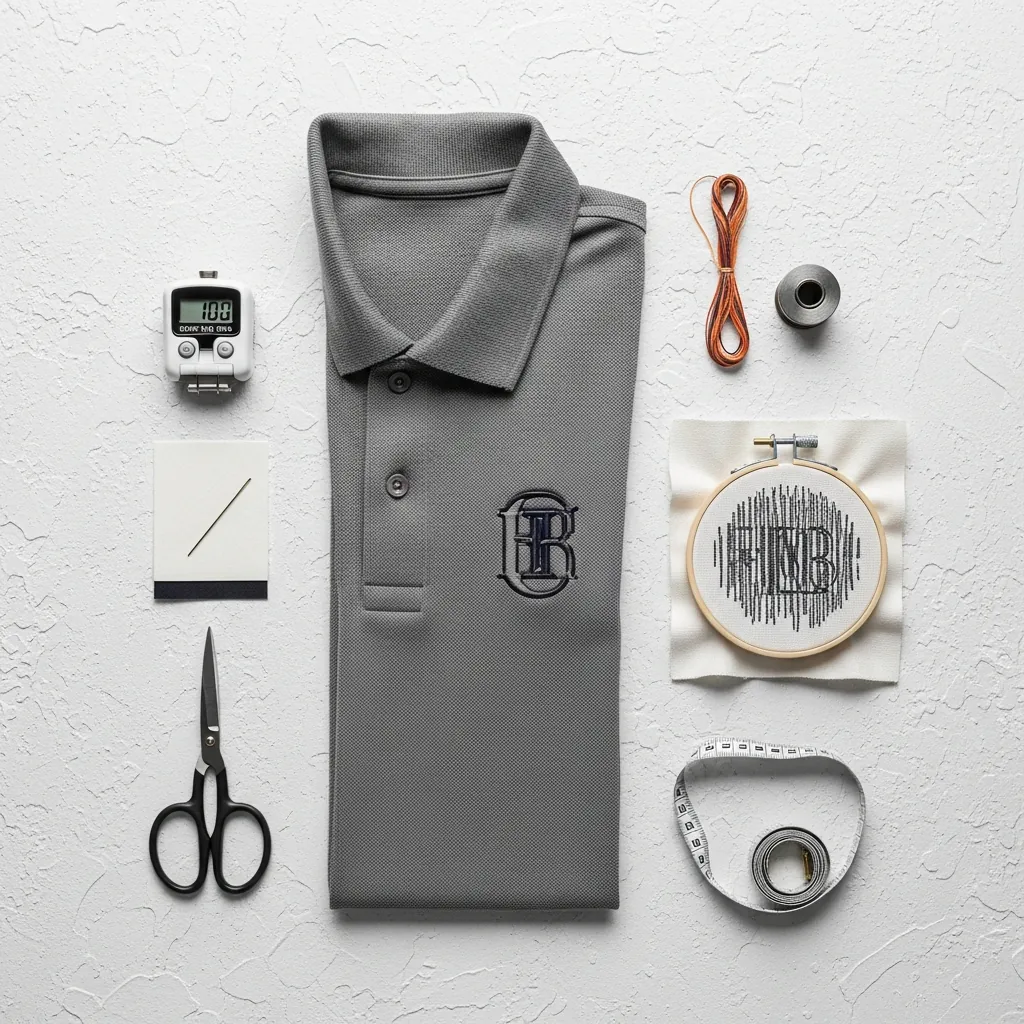
Embroidery sits at a higher price point than a simple screen print, but it carries a premium look and feel. Common on hats, polos, jackets, and workwear.
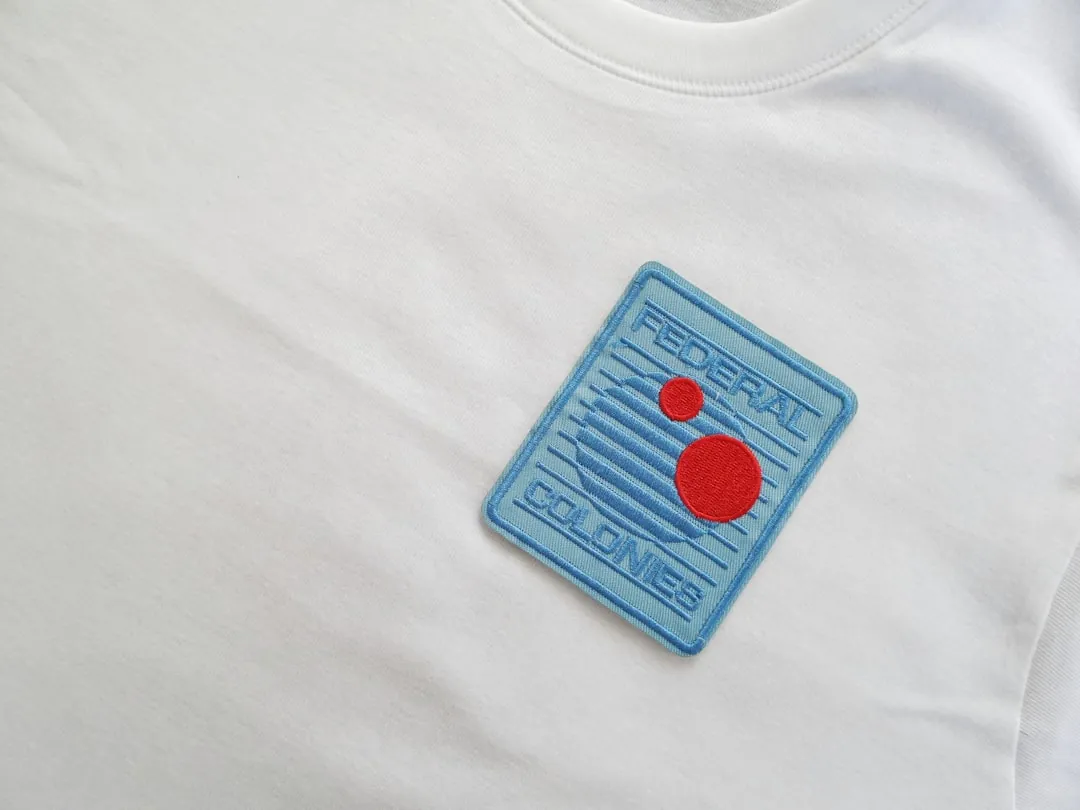
Embroidery costs depend on stitch count (how large and detailed the design is), number of locations (chest, sleeve, back), and quantity. At Fresh Prints Supply, embroidery is priced by stitch count rather than color count, so multi-colored logos don’t automatically cost more. Standard designs use one to eight thread colors.
For embroidery, Fresh Prints Supply has no minimum (1 piece is fine), with price breaks at 12 and 24 units. A one-time digitizing fee covers the creation of the stitch file. On larger orders, Fresh Prints Supply waives the digitizing fee entirely. Reorders reuse the same file at no extra setup charge.
Embroidery fits best for professional branding on staff or client-facing garments, logos that are clean and not extremely detailed (minimum text size is 0.25 inches), and thicker materials like caps, polos, and jackets.
DTF (Direct to Film): How It’s Priced
DTF printing transfers the design from a film sheet onto the garment with heat. It handles full color and gradients without needing separate screens for each color.
DTF costs depend on print size, quantity, and design complexity. Color count doesn’t affect cost the way it does with screen printing, which makes DTF cost-effective for detailed, multi-color artwork on mid-size runs.
DTF fits best when artwork is full-color or photo-style, when flexibility across different garment types is needed, and when durability and color vibrancy both matter.
DTG (Direct to Garment): How It’s Priced
DTG prints directly onto the fabric with a specialized printer. It works like an inkjet for shirts, producing a soft print that blends into the fabric.
DTG costs depend on print area and coverage, garment color and fabric, and quantity. DTG is typically better for small runs or samples where minimums on other methods don’t make sense.
DTG fits best for very small runs or test prints, complex multi-color artwork, and orders where a soft hand-feel matters more than per-piece cost efficiency.
How Quantity Changes the Price: 25 vs. 50 vs. 100 Units
Quantity has one of the biggest effects on custom apparel pricing. The reason is straightforward: every order has a fixed setup cost (screens, digitizing, machine configuration) and a variable cost per garment. With 25 units, that fixed cost hits each piece harder. With 100 units, the per-piece share drops.
This pattern holds across all decoration methods. Each tier up (25 to 50, 50 to 100) typically lowers the per-piece price when the artwork stays the same.
Screen Printing at Scale
On a standard cotton tee with a 1-color front print:
- At 25 units, screen setup is a significant part of the total, so per-unit cost is highest.
- At 50 units, setup spreads out and per-unit price improves noticeably.
- At 100 units, per-unit price drops further, often reaching the best value tier.
Adding colors increases cost because each color needs its own screen. Simplifying from a 3-color to a 1-color design often produces meaningful savings at every quantity tier.
Embroidery at Scale
On polos with a left-chest logo at medium stitch count:
- At 25 units, the digitizing fee and machine setup weigh heavily on each piece.
- At 50 units, that setup cost spreads and per-unit price improves.
- At 100 units, per-unit price typically reaches the best tier for that design.
Larger, filled designs with high stitch counts cost more than small, simple logos. A slightly smaller or simplified logo can lower stitch count and reduce per-piece cost.
DTF at Scale
On a full-color front design on mid-weight tees:
- At 25 units, per-piece cost is higher than a simple 1-color screen print but often lower than a complex multi-color screen job.
- At 50 units, price per piece improves as film and press time spread across more garments.
- At 100 units, DTF can be competitive with multi-color screen printing, especially on detailed artwork.
DTG at Scale
On premium cotton tees with a full-color front print:
- At 25 units, DTG is a practical choice for a soft print without committing to a larger run.
- At 50 units, per-unit price improves slightly, but screen printing or DTF may start to be more cost-effective.
- At 100 units, screen printing or DTF almost always wins on price. DTG remains useful for limited sizes or test runs.
Print Locations: How They Add Up
Every extra print location adds work and cost. Common locations include full front, left chest, full back, and sleeves.
Adding a second or third location increases the per-piece cost across all quantity tiers. A front-only print on 50 shirts fits one budget. Adding a full back print on those same 50 shirts can push the total significantly higher.
Deciding what needs to be large and visible versus what could be smaller or omitted makes a real difference. A left-chest logo and a sleeve print often tell the story just as clearly as a large front and back print.
Color Count and Its Impact
Color affects pricing differently depending on the method.
For screen printing, each color means a separate screen. More colors mean more setup, more time, and higher cost. Simplifying from 4 colors to 2 or 1 can lower the total meaningfully.
For DTF and DTG, full color is built into the process. Complexity matters less in terms of color count and more in terms of print size and ink coverage.
For embroidery, stitch count and design size drive cost more than color count. At Fresh Prints Supply, embroidery pricing is stitch-based, so adding a second or third thread color doesn’t automatically raise the price.
Rush Fees and Turnaround
Standard production windows help decorators plan scheduling and purchasing efficiently. Rush orders compress that timeline and typically carry a rush fee to cover overtime, priority scheduling, and expedited garment sourcing.
Orders move fastest when artwork, print placements, garment colors, and size breakdowns are finalized upfront. Planning ahead means more garment options, lower costs, and no rush surcharges.
Add-Ons That Affect the Total
Several optional extras change the final number: fold and bag services, size sticker labels, custom neck tags or relabeling, specialty inks or finishes, and oversized or specialty print placements.
These make sense for retail projects or online merch stores. For internal staff shirts or one-time event giveaways, skipping extras and putting that budget toward better garments usually delivers more impact.
When the Quote Feels High: Where to Adjust
A higher-than-expected quote is normal, especially for first-time orders. Instead of starting over, four levers can bring the number down:
- Quantity: Moving from 25 to 50, or 50 to 100, drops the per-unit price at every method.
- Garment: Shifting from a premium to a mid-tier garment while staying on-brand can save significantly across a full order.
- Print locations: Reducing from front-and-back to front-only, or front plus a small sleeve print, cuts per-piece cost.
- Colors or design size: Simplifying the artwork or printing it smaller in one location reduces setup and production cost.
Often a small change in one of these areas solves the budget issue without losing the impact.
Getting a Quote from Fresh Prints Supply
A clear brief leads to an accurate quote. The details that matter: garment type and a preferred brand or style (Gildan, Bella+Canvas, Next Level, etc.), quantity ranges being considered (25, 50, 100), preferred decoration method if known, artwork files or even a rough draft, print locations and must-have colors, timeline and budget range.
With that information, Fresh Prints Supply provides two or three pricing options side by side, comparing methods and garment tiers so the tradeoffs are clear. For recurring orders like staff uniforms or ongoing merch programs, ask about bulk ordering and reorder pricing.
Custom apparel pricing follows a pattern. Once the relationship between quantity, garment choice, and decoration method is clear, sharper questions get asked, decisions happen faster, and the right option for the project and budget becomes obvious.
Related reading
Want this done for your order?
Send the garments, a rough quantity and your logo. We reply with a method, a mockup and a price per piece.
Rajan Bains, founder of Fresh Prints Supply Co. Every guide comes from orders we run in our Surrey shop. About us →
Related service: Compare screen printing, embroidery and DTF · Compare all methods
Prefer to talk it through?
Call or visit the shop. Tell us what you are making, how many, and when you need it.
- Reply within one business day
- Free digital mockup before production
- No hidden fees