
Restaurant Uniform System for Surrey Restaurants
Why a Restaurant Uniform System Matters in Surrey and Greater Vancouver
A strong restaurant uniform system helps Surrey restaurants keep branding, onboarding, and day-to-day operations consistent across every role and location. Without a clear standard, uniform choices drift over time, reordering becomes harder to manage, and new hires start without the same expectations. Managers feel the friction quickly, but guests can notice it too.
That inconsistency creates brand drift, slower onboarding, and messy reorders across locations. Staffing pressure makes the problem harder to ignore. Restaurants also see high staff turnover, so uniform rules have to work for a new hire from the first shift.
For Surrey operators serving Greater Vancouver, a repeatable restaurant staff uniforms process keeps standards from slipping when the schedule gets tight.
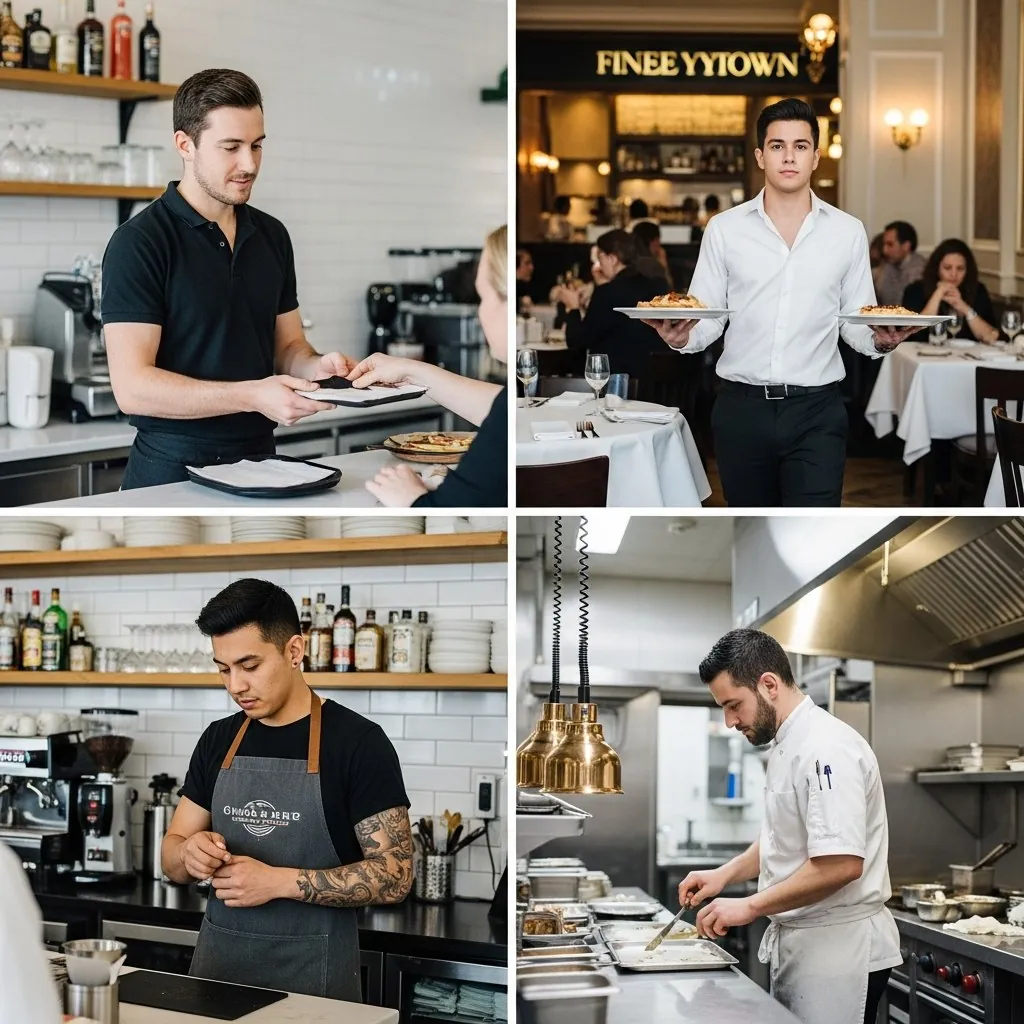
Guest perception matters just as much. How your team looks gives guests a visible cue about how the place is run. A host in a clean branded shirt, a line cook in proper kitchen gear, and a manager who looks easy to identify all support the same brand promise.
What to Include in a Restaurant Uniform System
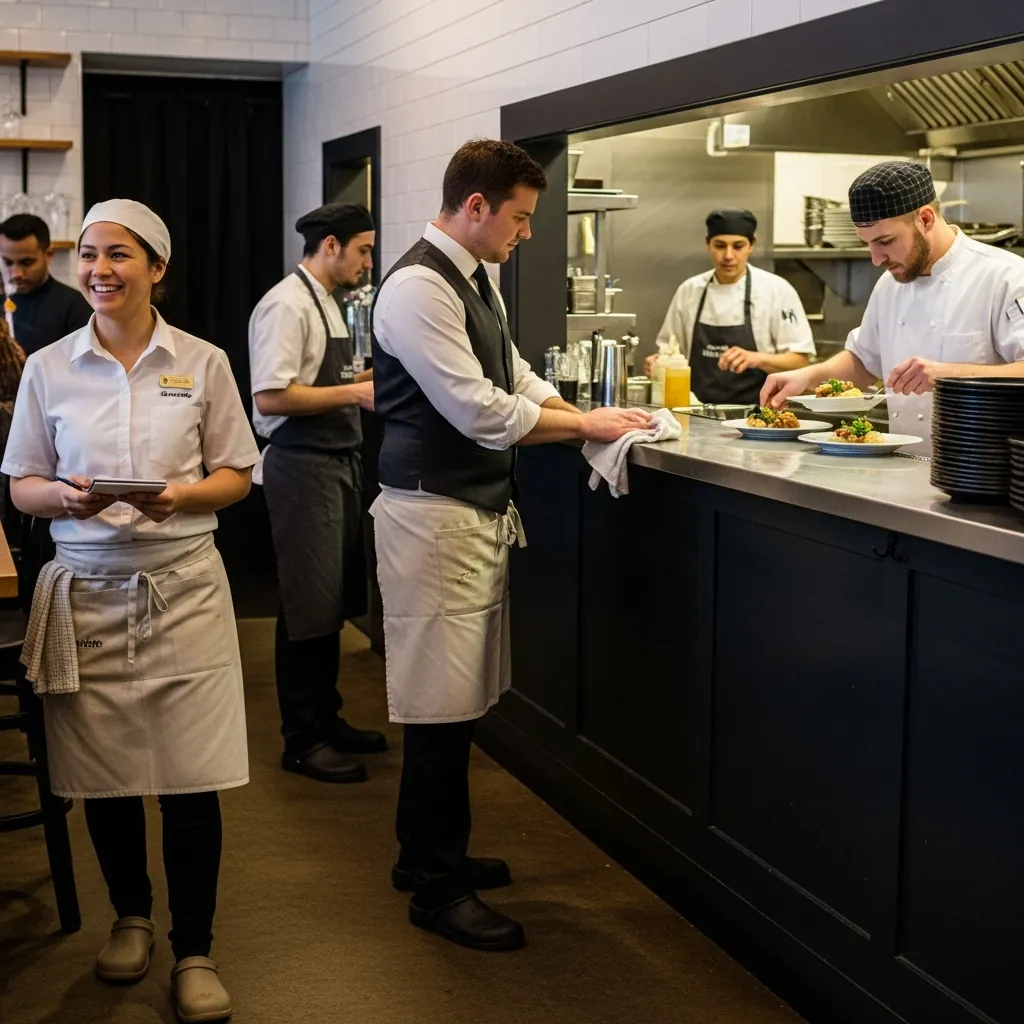
A uniform program needs more than a purchase order. It needs rules that people can follow without guessing.
Your written standard should cover five areas:
- Approved garments by role
- Logo and decoration standards
- Sizing and fit process
- Onboarding issue quantities
- Replacement and reorder rules
Clear policy matters in British Columbia. The Government of British Columbia says employers can require a uniform, and an employer who does must provide it to employees at no cost. Your policy should still spell out requirements, costs, and expectations. When a policy leaves gaps, each manager fills them differently, and consistency fades.
Purchasing discipline matters here too. Standardization cuts variety, lowers stockholding, and simplifies purchasing. So your hospitality uniform program should narrow choices by role instead of letting every location pick its own style, color, and logo treatment.
Preset kits reduce decision fatigue. A server shouldn’t need to guess between a tee, polo, or woven shirt. A kitchen lead shouldn’t wonder which apron carries the approved logo. Once the kit is fixed, ordering gets cleaner and day-one expectations get clearer.
FOH Uniform Kits for Hosts, Servers, Bar Staff, and Cafes
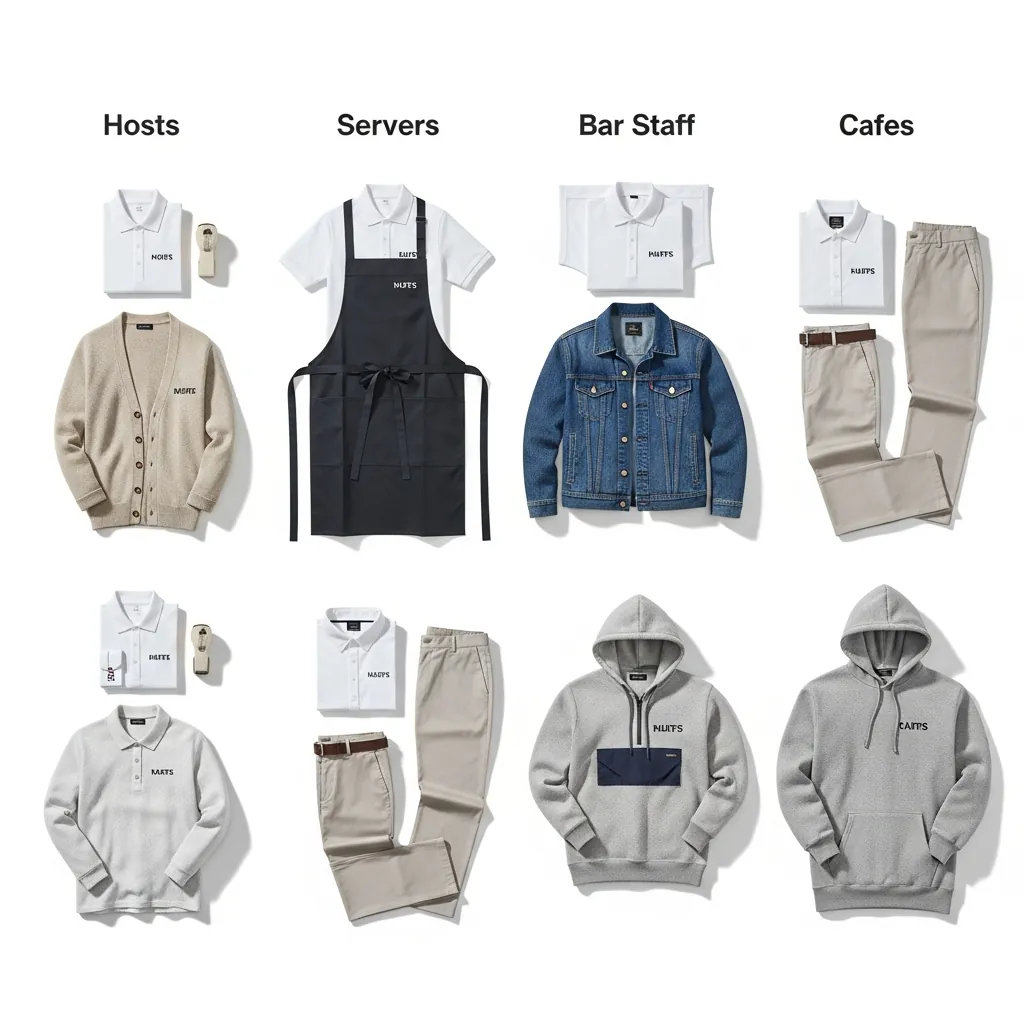
Front-of-house uniforms carry your brand in plain view. Guests notice them before the first plate hits the table.
For most restaurants and cafes, FOH basics should include:
- Branded polo or button-up
- Waist or bib apron, based on service style
- Black or approved neutral pant guidance
- Light outerwear for patio service or entry coverage
Polyester-cotton blends are a practical baseline. These blends combine cotton comfort with polyester durability, wrinkle resistance, and easier care. Comfort still matters. Moisture-managing fabrics can help during active shifts, especially for staff moving between the dining room, patio, and bar.
Starter quantities should support rotation between shifts and wash cycles. Plan for more than one set per person so a clean replacement is always available. For owner-managed programs, this is a sound starting point.
Host and server kit
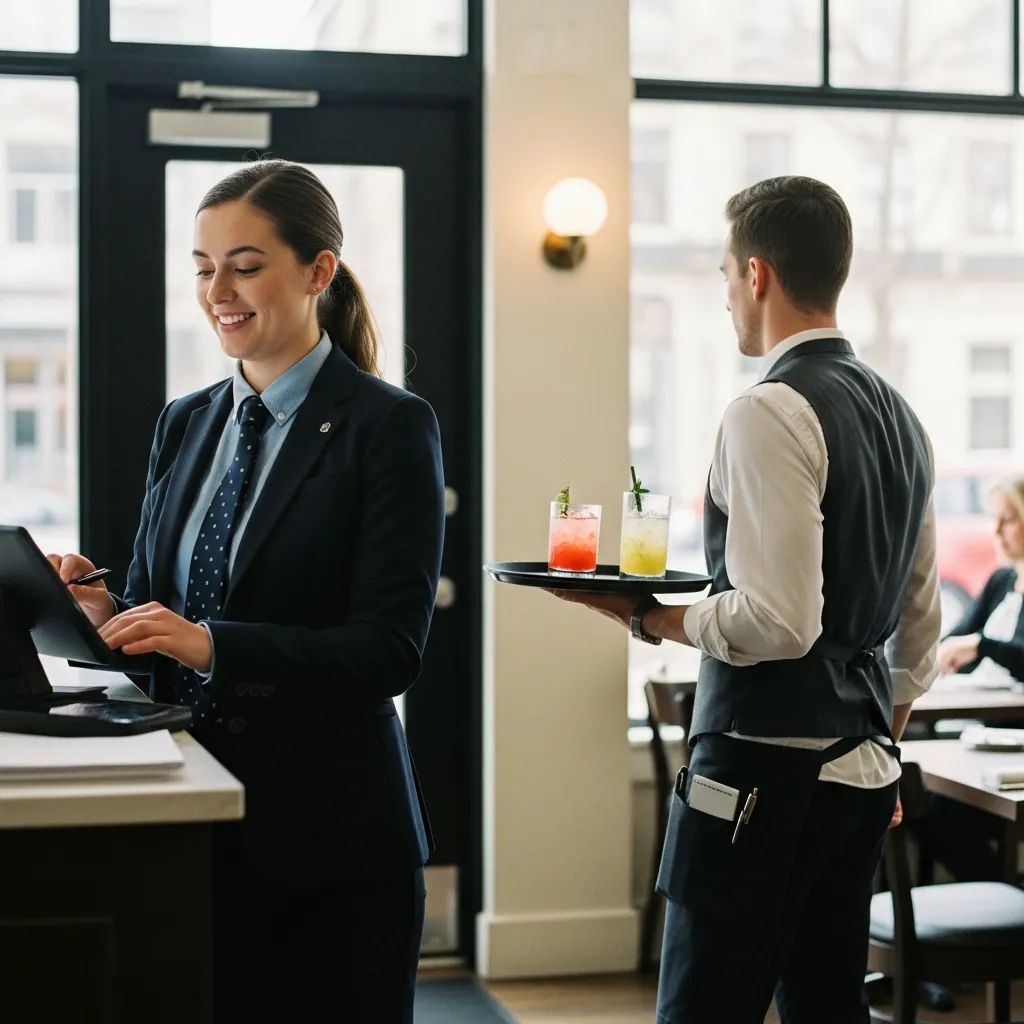
- 3 shirts
- 2 aprons
- 1 outerwear layer for patio use or cooler months
Bar staff kit
- 3 shirts or bar-specific tops
- 2 aprons
- 1 outer layer if service extends to patio or curbside handoff
Counter-service cafe kit
- 3 polos or tees
- 2 aprons
- 1 lightweight zip or fleece
Decoration should match both visibility and wash demands. Embroidery usually works well on polos, woven shirts, and outerwear because it keeps a polished look. Printed logos often suit tees where softer hand feel matters. Keep branding clean and readable across front-of-house uniforms, especially in guest-facing roles.
BOH Uniform Kits for Line Cooks, Prep, Dish, and Kitchen Leads
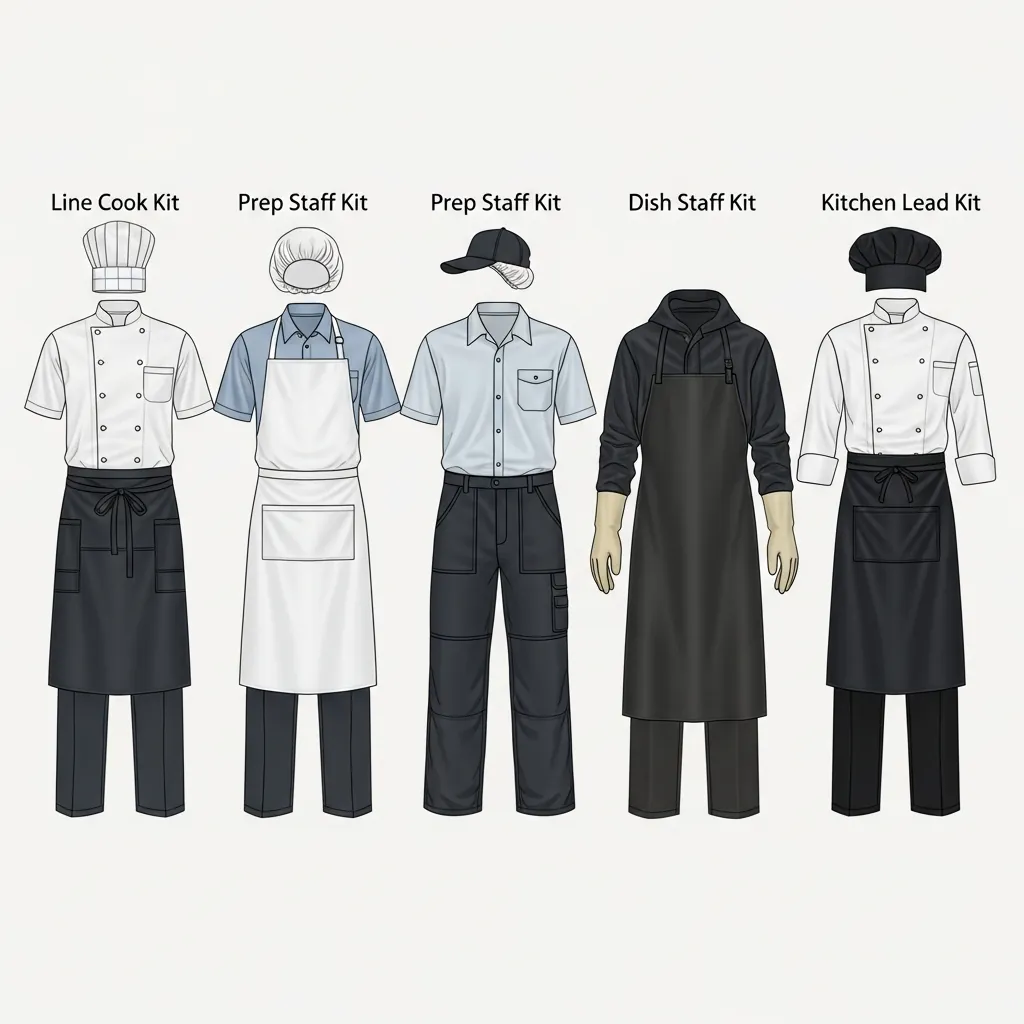
Kitchen uniforms fail fast when the garment choice ignores heat, grease, and repeated washing. The back line doesn’t forgive weak fabric or vague standards.
Food employees should wear clean outer clothing, so a clear laundering routine belongs in the policy. The Canadian Centre for Occupational Health and Safety notes that slips, trips, and falls are the most common cause of injury at work, which supports clear policies that align uniforms with slip-resistant footwear requirements.
Your BOH kit should focus on movement, durability, and hygiene:
Line cooks
- 3 chef coats or 3 durable kitchen tees, based on the concept
- 2 to 3 aprons
- 1 approved cap or hat style
Prep staff
- 3 tees or lightweight coats
- 2 aprons
- 1 cap or hair restraint suited to the operation
Dish pit
- 3 durable tees
- 2 heavier-duty aprons where splash protection is needed
- 1 cap if house policy requires it
Kitchen leads
- 3 chef coats or premium kitchen shirts
- 2 aprons
- 1 lead identifier, such as a name badge or title embroidery
Protective gear should match the station. A line cook working near hot surfaces may need more coverage than a prep employee in a cooler area.
Write the standard in plain language. State approved garments, footwear requirements, and replacement rules for back-of-house uniforms so supervisors aren’t forced to improvise during a staffing crunch.
Manager Uniform Kits for Daily Operations
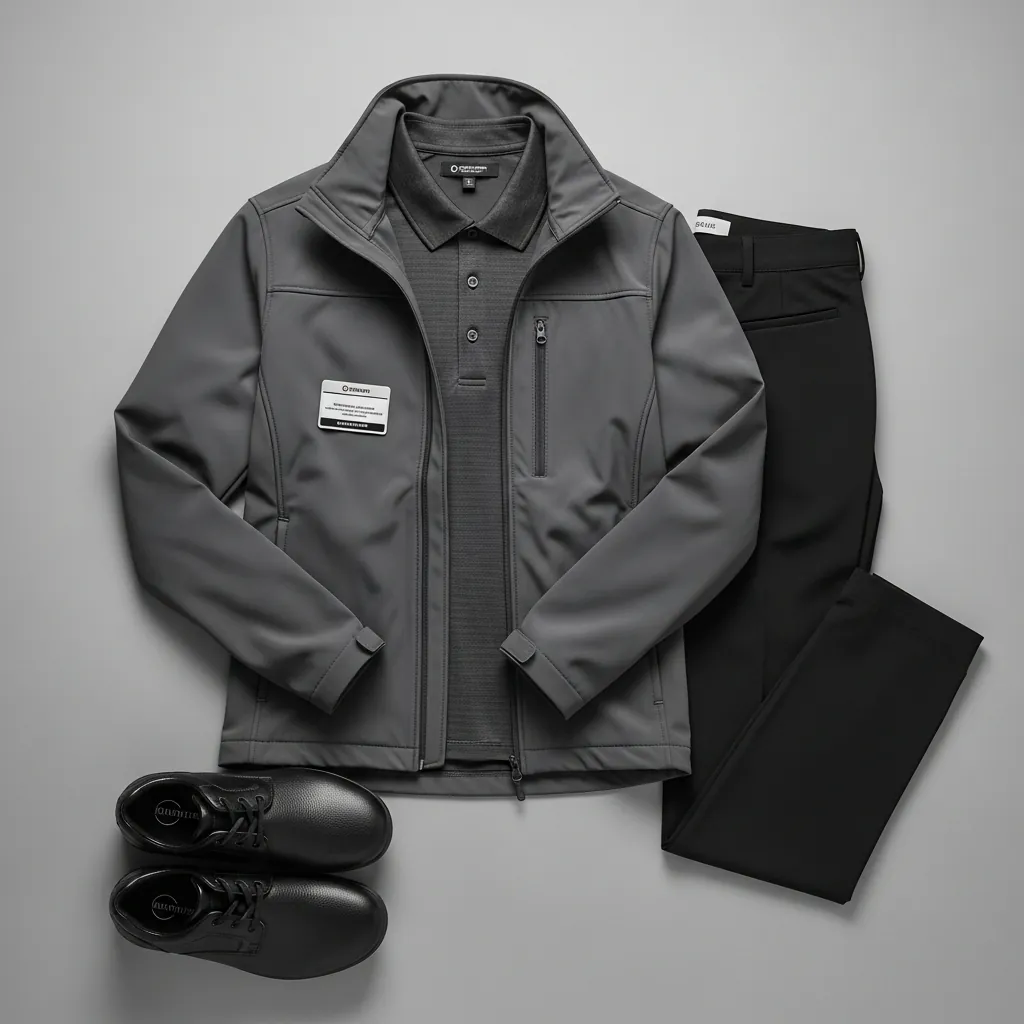
Managers move everywhere. One hour they’re greeting guests, then covering expo, then stepping outside in the rain to check a delivery.
A practical manager kit often includes:
- 2 branded polos or button-ups
- 1 premium outerwear piece
- 1 secondary layer, such as a quarter-zip or fleece
- Name identification
Name visibility still matters. Name tags let a guest tell who to ask, which matters on a busy shift. Guests should not have to scan the room to find someone who can handle an issue.
Manager kits should sit slightly above hourly uniforms in finish and appearance, but they still need to handle active work. In Surrey, weather matters. Patio checks, curbside handoff, and rainy site visits make a clean softshell or lightweight jacket more useful than another indoor-only shirt.
Keep this kit tighter and a bit more polished. That’s usually enough to maintain a consistent manager uniform kit across multiple locations.
Decoration Rules That Survive Real Wash Cycles
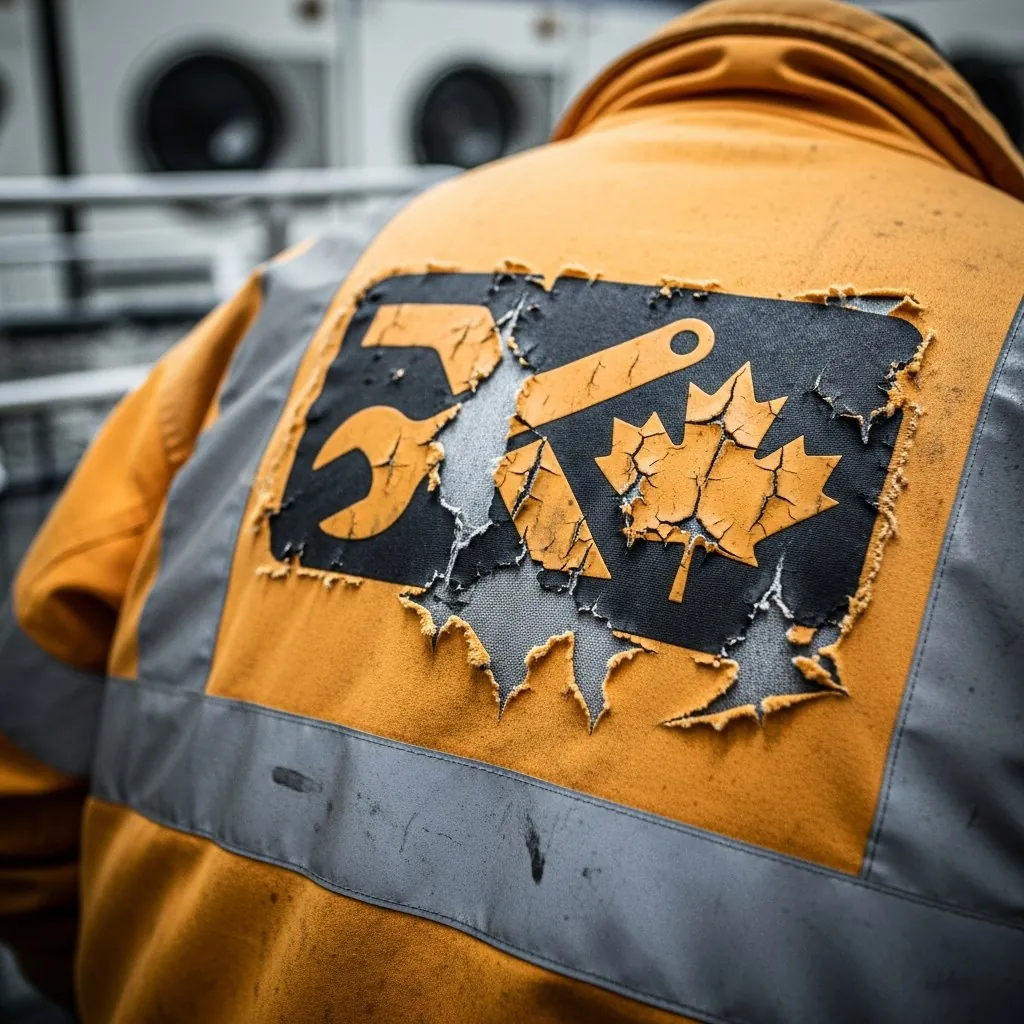
Restaurant wash cycles expose every bad logo choice. Cracked prints, peeling film, and warped placement make even decent garments look worn out early.
Embroidery is often the safest option for polos, aprons, button-ups, and outerwear. Heat-applied graphics can be more sensitive to wash temperature and dryer heat, while embroidery generally holds up better under repeated laundering. Screen print can still work well on tees, especially when you want a lighter feel, but the method should match the fabric and care routine.
A few rules keep reorders cleaner:
- Use one primary logo version on most garments
- Keep placement consistent, usually left chest or centered apron chest
- Reserve alternate treatments for limited cases, such as outerwear or a large back print on promo tees
- Test one sample through several wash cycles before full rollout
Too many logo versions create avoidable confusion. Seasonal color swaps do the same when they never make it onto the approved list. A tight decoration standard protects the look of your restaurant uniform system and reduces reorder mistakes for custom logo uniforms.
How to Standardize Reorders and Onboarding Kits
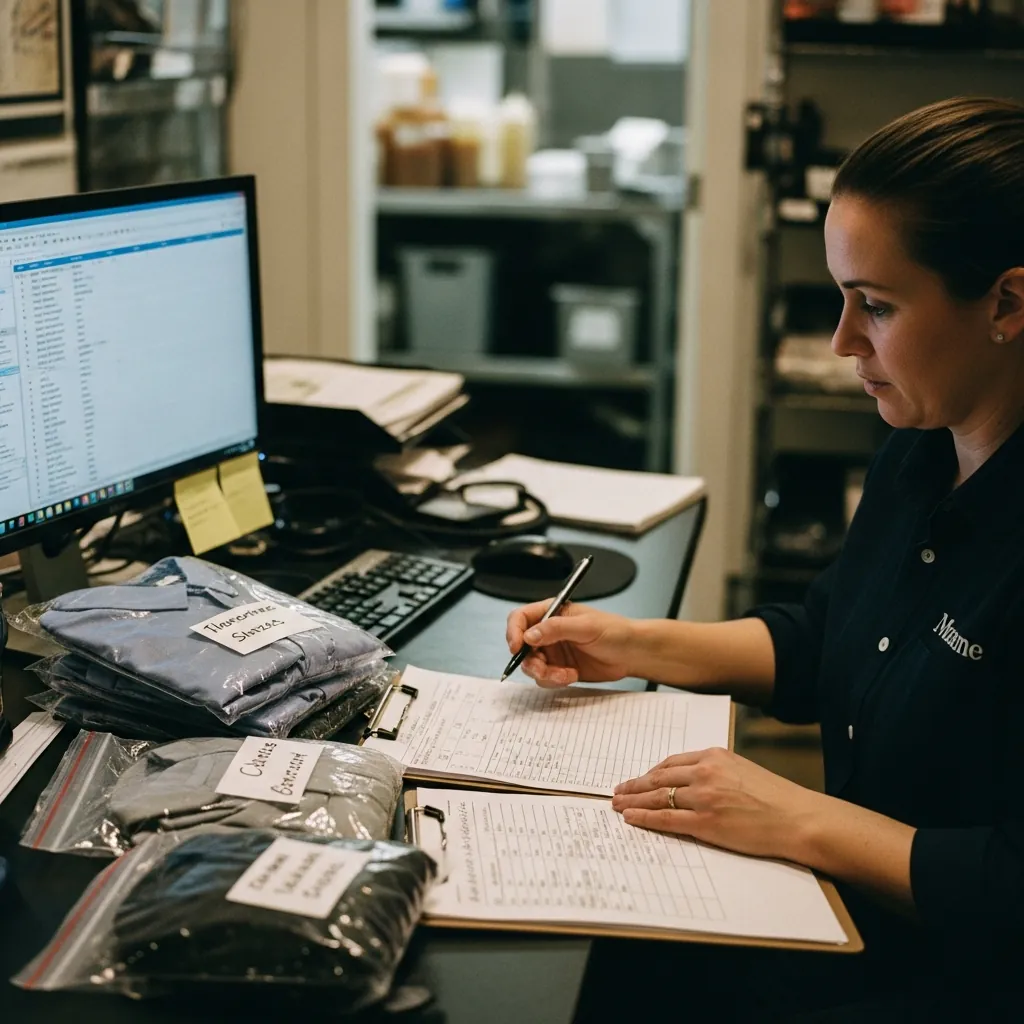
Multi-location problems often start with SKU sprawl. One store buys navy from Vendor A, another orders black from Vendor B, and head office inherits the mess.
Standardizing on one spec keeps spend in one place and makes reorders predictable. Fewer variations means fewer things to count and reorder. The same goes for restaurant apparel.
Build your reorder structure around four controls:
- A role-based SKU list with approved garment, color, logo version, and vendor code
- Par quantities by location and role
- Reorder triggers tied to seasonality and turnover
- A simple exception approval process
Onboarding kits should follow the job title, not the manager’s preference. A new server kit can always mean 3 shirts and 2 aprons. A new kitchen lead kit can always mean 3 coats and 2 aprons.
Ownership matters too. Assign one person to approve exceptions, one team to handle size swaps, and location leaders to review usage on a fixed schedule. That’s how uniform reordering process stays under control instead of drifting over time.
Common Restaurant Uniform System Mistakes to Avoid
Cheap uniforms often cost more after a few washes. Weigh wash life and quality alongside the upfront price.
Common mistakes include:
- Choosing garments on unit price alone instead of wash life
- Approving too many styles, colors, or logo versions
- Ignoring BOH heat, splash, and movement needs
- Launching without a written uniform policy
- Letting each location buy off-list items
Standardization reduces complexity and order errors. Restaurants feel that directly in reorders, onboarding, and day-to-day brand consistency.
Build a Restaurant Uniform System That Holds Up
A strong restaurant uniform system gives operators a repeatable standard for issuing role-based kits, applying decoration that lasts through real wash cycles, and keeping reorders consistent across locations.
Start with one FOH kit, one BOH kit, and one manager kit. Test samples. Confirm sizing. Then put the 30-day rollout plan in writing before the next hiring wave hits.
Want this done for your order?
Send the garments, a rough quantity and your logo. We reply with a method, a mockup and a price per piece.
Rajan Bains, founder of Fresh Prints Supply Co. Every guide comes from orders we run in our Surrey shop. About us →
Related service: Restaurant and hospitality uniforms · Compare all methods
Prefer to talk it through?
Call or visit the shop. Tell us what you are making, how many, and when you need it.
- Reply within one business day
- Free digital mockup before production
- No hidden fees